What Is Foot-and-Mouth Disease?
Foot-and-mouth disease (FMD) is a highly contagious viral disease affecting all cloven-hoofed animals including cattle, sheep, goats, pigs, and many wildlife species. It spreads through direct animal contact, airborne transmission, contaminated vehicles, equipment, footwear, and feed.
FMD does not affect humans clinically, but its economic and regulatory consequences for livestock producers in southern Africa are severe and immediate.
Why FMD Matters in South Africa
South Africa maintains a disease-free zone (DFZ) in most provinces, which supports live animal and product export to key markets. An outbreak within the DFZ triggers:
- Immediate livestock movement restrictions across the affected zone
- Suspension of export certificates for live animals and animal products
- Mandatory slaughter or quarantine of affected and contact herds
- Potential extension of restrictions to neighbouring properties
- Significant short- and long-term revenue loss for affected operations
The FMD protection zones along the northern border of the country — particularly the Limpopo River zone — require stricter movement controls and regular surveillance. Even farms outside the controlled area are at risk if biosecurity discipline is poor.
Legal Obligations Under the Animal Diseases Act
FMD is a listed disease under the Animal Diseases Act 35 of 1984. Every livestock producer in South Africa has a legal duty to:
- Report suspected FMD cases immediately to the State Veterinarian — failure to report is a criminal offence
- Comply with movement restrictions declared by the State Veterinarian or Department of Agriculture, Land Reform and Rural Development (DALRRD)
- Allow inspections of premises and records by authorised officials
- Produce visitor and movement records on request during a disease investigation
Official guidance takes precedence. This resource provides general operational biosecurity guidance only. During active outbreak conditions or declared controlled areas, always follow the instructions of your State Veterinarian or DALRRD inspector. Regulations, protocols, and disinfectant requirements may differ from the general advice here.
The Three Biosecurity Zones Every Farm Needs
Outer Perimeter
The farm boundary. All vehicle and personnel access must funnel through a single controlled entry point — not multiple farm gates.
Entry Control Zone
The gate area where vehicles are disinfected, visitors are logged, and biosecurity requirements are communicated and confirmed before entry is granted.
Livestock Contact Zone
Where animals are kept. Only cleared personnel and equipment may enter this zone. Movement between zones must follow a clean/dirty separation protocol.
Key Biosecurity Practices at the Farm Gate
Vehicle and Equipment Control
FMD virus survives on vehicle tyres, wheel wells, and undercarriages for several hours. Every vehicle that has been to another livestock property — including feed trucks, transport vehicles, and contractors — must be disinfected at the farm gate before entry. This includes the cab step, tyres, and undercarriage as a minimum.
See our detailed vehicle and equipment disinfection protocol for step-by-step guidance.
Visitor and Personnel Control
All visitors — including veterinarians, inspectors, contractors, and sales representatives — must be recorded in a visitor register before entry. This register must capture the visitor's name, contact details, vehicle registration, purpose of visit, and entry/exit times.
If a visitor has been on another livestock farm within the previous 48–72 hours, they represent an elevated biosecurity risk and should be restricted to the farm office or perimeter areas unless essential.
See our visitor and contractor control guide for what to record and how to maintain your register.
Foot Disinfection
All personnel entering animal contact zones must pass through an effective foot dip or spray. Footbaths must be checked daily — a cloudy or dark solution indicates organic contamination that reduces disinfectant effectiveness. Replace the solution whenever visibly contaminated.
Signage and Communication
Farm gate biosecurity only works when it is consistently enforced. Clear, visible signage at the farm entrance communicates entry requirements to all visitors before they reach the gate — reducing confrontation and making the system self-explaining.
Building a Culture of Biosecurity
The strongest biosecurity systems on commercial farms are not complex — they are consistent. Simple, visible protocols followed every day by all staff and visitors provide far more protection than elaborate procedures that break down under pressure or fatigue.
Practical tools help: printed registers at the gate ensure forms are always available; laminated protocol cards at disinfection stations remind staff of the procedure without needing training refreshers; signed biosecurity declarations for contractors make obligations visible and traceable.
The farm gate biosecurity checklist gives you a ready-to-use daily reference for your gate operation.
Additional South Africa Resources
- DALRRD Animal Health Directorate — for regulatory updates, controlled area notifications, and official FMD status maps
- Your provincial State Veterinarian — primary point of contact for disease reporting and controlled area enquiries
- Agri SA and commodity organisations (Red Meat Producers' Organisation, Milk SA, etc.) — industry biosecurity protocols and outbreak notifications
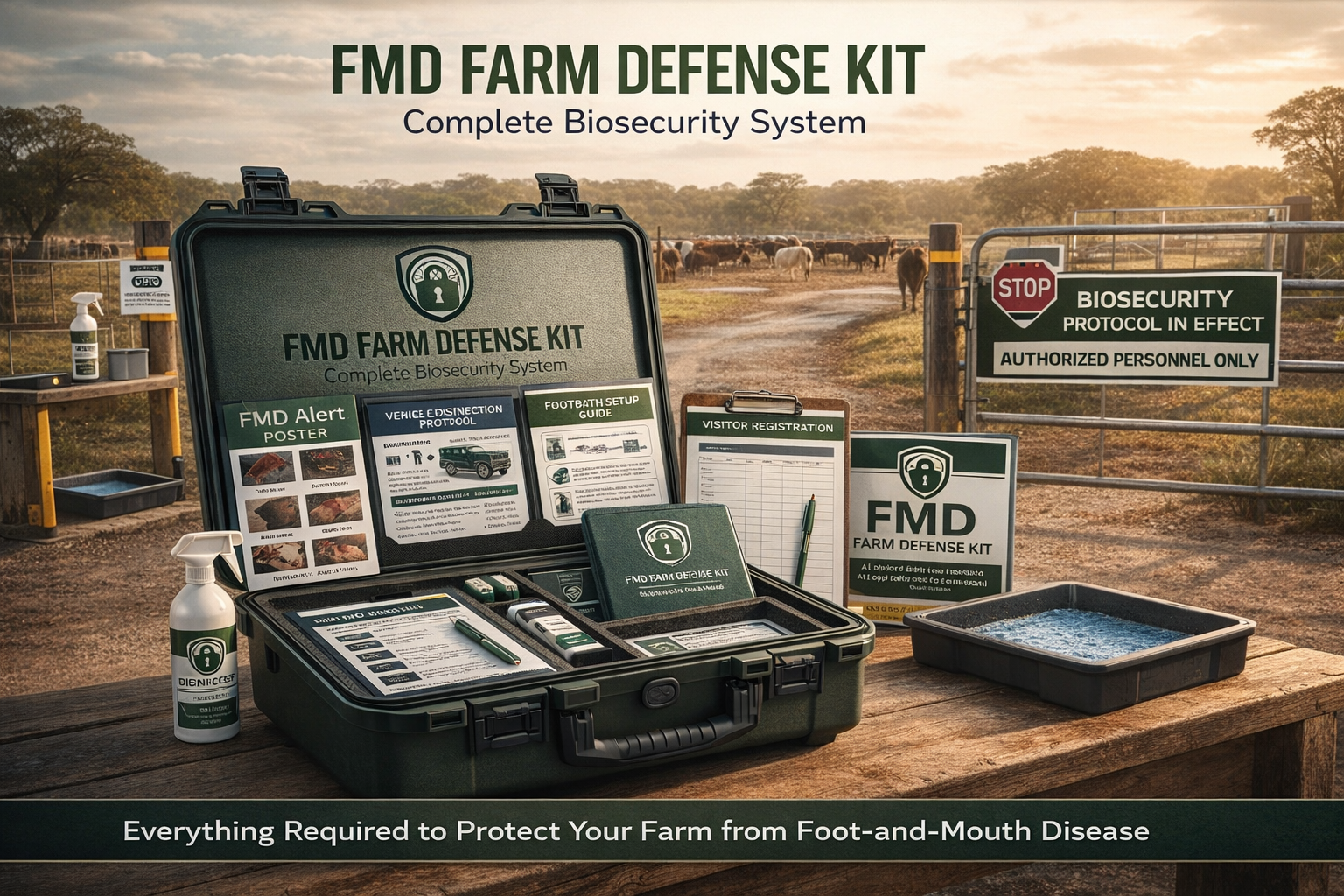
Ready to put physical systems at your gate? The FMD Farm Defense Kit gives you all the printable assets — gate signs, vehicle disinfection records, visitor registers, worker briefing tools, and tactical field cards — in one download.